Every physical deal comes down to product that exists in a tank, a name on its title, and a route to a buyer.
Title. The authority to sell sits with the seller: the party whose name is on the title the tank operator holds. Lesson 2.3
Tank. Tank verification is the single highest value due diligence step in any deal. Lesson 2.5
Journey. Source, export tank, vessel, destination tank, end buyer. Every arrow is gated by a document. Lesson 2.8
02 The ecosystem
The barrel’s journey
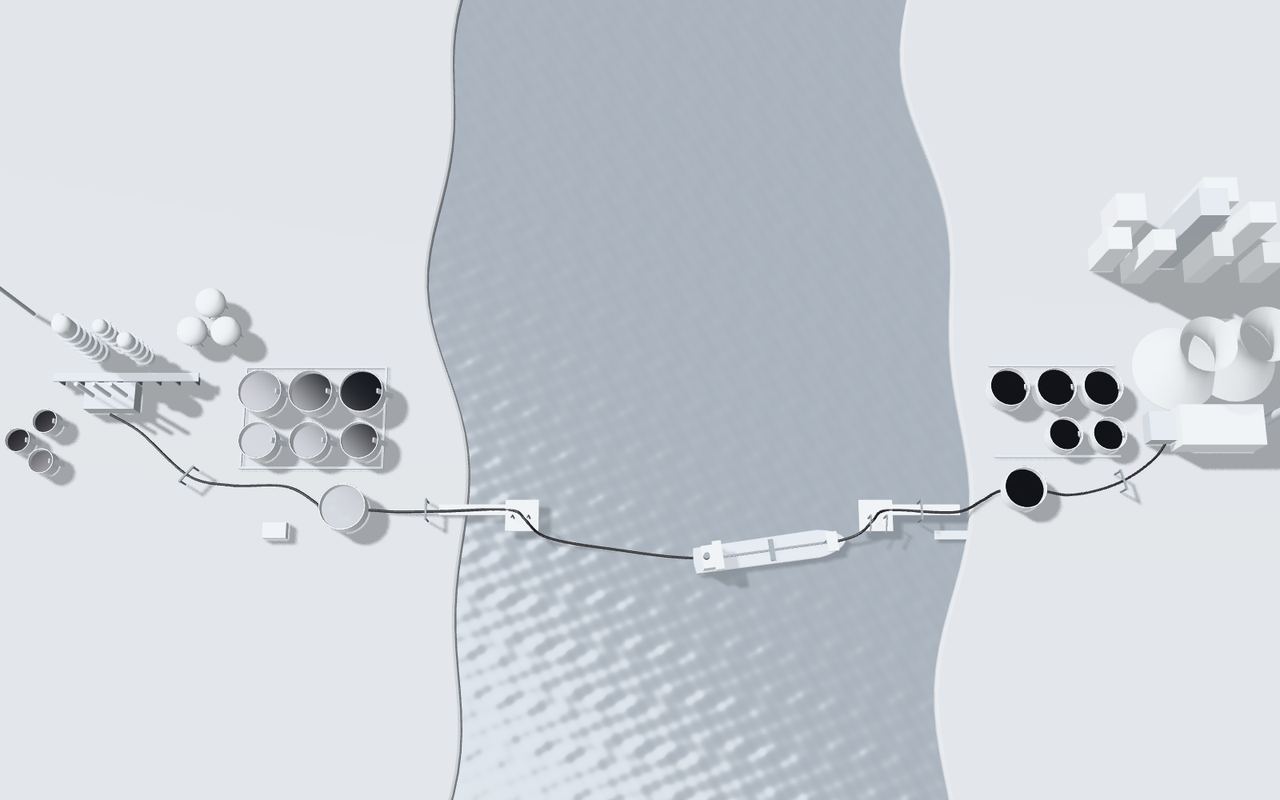
Module 2 names every participant in a physical oil deal and places them in the chain. Product moves primarily by vessel, with pipeline as the secondary mode. Lesson 2.8, Figure 9
01Source, refinery or paddler tank. Seller: the name on the title. Inspector: sGS samples at load. Gate to export terminal: Injection, SGS at load, Certificate of Origin.
02Export terminal, tier 1 or Tier 2 tank. Tank operator: holds the registry of who owns what. Buyer: engages the operator first, with an ATV. Gate to vessel: ATV, UDTA, TTO if title changes in tank, NOR, Loading arms, Berth, tug.
03Vessel, chartered under Charter Party. Gate to destination terminal: Bill of Lading, Laytime, Demurrage.
04Destination terminal, tier 1 or Tier 2 tank. Inspector: sGS, Intertek or Amspec at discharge. Bank: mT103 settles every closed deal. Gate to end buyer: SGS at discharge, REACH / ECHA if the cargo lands in the EU, DNA test if origin is contested.
05End buyer, institutional or physical consumption. Buyer: institutional: airlines, utilities, defence, state carriers.
03 The knowledge
The whole map, from above. Every later module zooms into part of it.
The product
Source
Export terminal
Vessel and the water
Destination terminal
End buyer
Document gates
Tank farms
Bank
03 The knowledge
The curriculum
Eighteen modules across three certification tracks, then the live deal walkthroughs. Where a module zooms into a part of this world, point at it to see where.
Titles and tracks as listed in Module 2, Lesson 2.1. Notes are what Module 2 itself says each module covers.
Foundation Modules 1 to 6
01
The Real Market
The market as folkloric and family controlled, and the five failure modes that break almost everyone who walks in. Lesson 2.1
The cast of characters, the territory they occupy, and where the broker actually stands. Module 2 introduction
Published here, with sample Lesson 2.4
03
What You're Selling
Product. Unlocked by the Module 2 Mastery Test. Module 2 introduction
04
The Four Ports
Each port built operationally: vessel class limits, regulator stacks, current operating posture, and the 8 step arrival flow. Lesson 2.8
05
Logistics: How Product Actually Moves
The 5 transfer methods, and every mechanism on the water: TTT, TTV, TTVIA, STS, TTO, CPA, NOR, Q88, BoL, laytime, demurrage. Lesson 2.8
06
How Deals Are Priced
The four Platts publications and the code grid. Lesson 2.8
Operator Modules 7 to 12
07
The Legal Foundation
NCNDA and IMFPA legal text and its enforceability realities. Lesson 2.4
08
How a Deal Is Made
The 14 event commercial deal sequence, the spine of the deal, and the two flow shapes, A and B, named. Lesson 2.1
09
Every Document Explained
Every document that gates the barrel's journey. Lesson 2.8
10
The Money Side
Money, including the full escrow walkthrough. Lesson 2.6
11
Commissions
Commission rates, AML caps, buyer side vs seller side splits, paymaster mechanics. Lesson 2.4
12
Fraud, Scams, and Red Flags
CRUDE Senior Broker Modules 13 to 18
13
Port by Port Procedures
Flow shapes A and B walked port by port, and the actual tank verification procedure. Lesson 2.5
14
Getting Into the Market
Brokerage licensing. Lesson 2.4
15
Why the Price Moves
16
Sanctions and Compliance Exposure
17
Negotiation Craft
18
Closure
Then Unnumbered
then
The Live Deal Walkthrough Set
18 numbered modules. Only Module 2 and Lesson 2.4 are published so far.
Follow one cargo
One parcel of refined product, from a source tank to an institutional end buyer. Every arrow is gated by at least one document, and every stop has a decision a broker has to get right.
Illustrative exampleA hypothetical cargo used to teach the shape of the trade, not a record of a real deal. Stages and documents follow Figure 9 of Module 2.
The product starts at the source: a refinery, which takes crude and turns it into finished product, or an authorised paddler, a blender aggregator stood up in a major port.
The decision
Check who can actually sell
A mandate is not the principal. The authority to sell always sits with the seller, because the seller is the party whose name is on the title the tank operator holds. Listed refineries are verifiable. Nonlisted run on trust.
Source: Lesson 2.3 and Module 2 introduction
Who is involved
Seller
The party whose name is on the title the tank operator holds.
Broker chain
Mandates, resellers and brokers between the seller and the buyer. Each link earns its own spread.
Inspector
SGS samples at load before the product moves on.
Paper on the way to Export terminal
Injection
SGS at load
Certificate of Origin
Stop 02 of 05
Export terminal
Tier 1 or Tier 2 tank
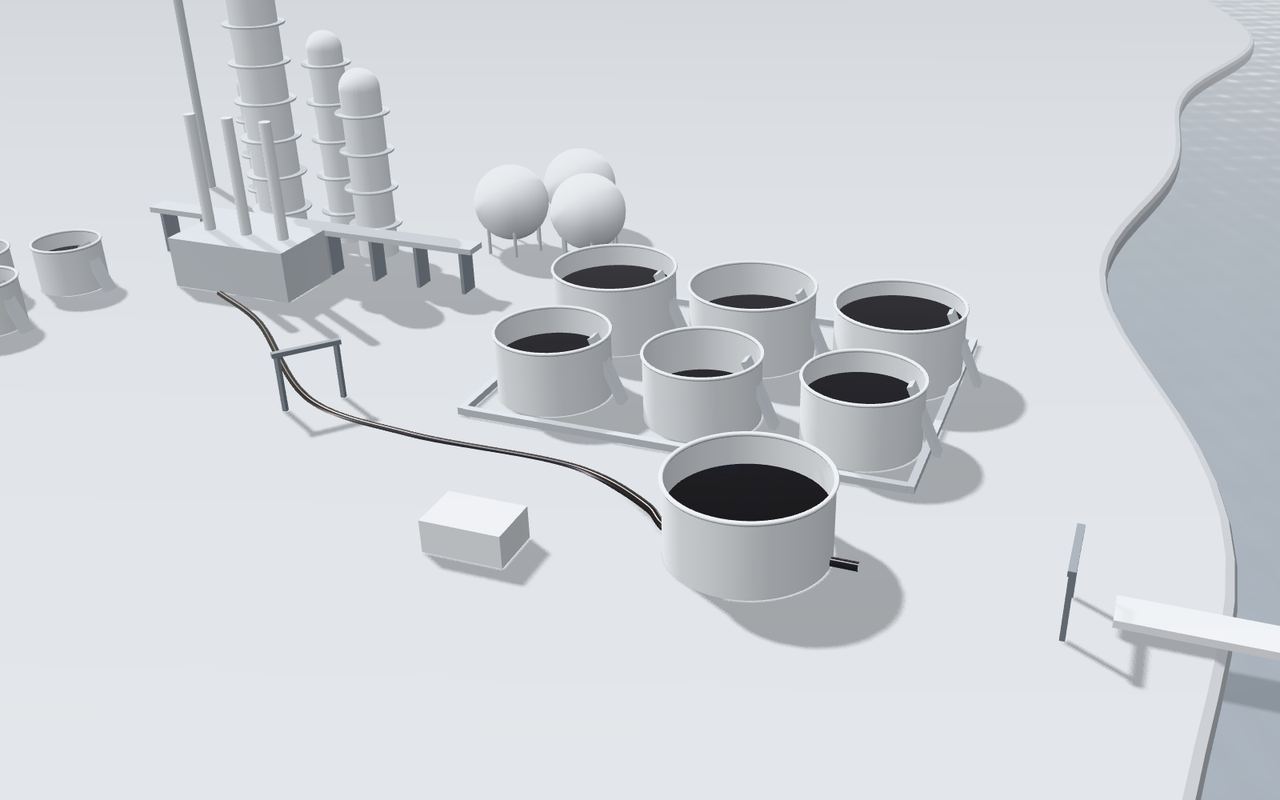
The product sits in a tank farm, an independent storage terminal that rents tanks to product owners. It stores the product, holds the registry of who owns what, executes the transfer, and gates the buyer.
The decision
Verify the tank
Tank verification is the single highest value due diligence step in any deal. For a Tier 2 operator, confirm it is a registered sublease of the Tier 1 terminal and registered with the port, not by looking at its marketing.
Source: Lesson 2.5
Who is involved
Tank operator
Has no stake in whose story is true, which is why its registry settles more arguments than any other layer.
Buyer
Engages the operator first with an ATV, to confirm the seller’s position is real.
Seller
Title can change in tank by a Tank Takeover (TTO) on the operator’s registry.
Paper on the way to Vessel
ATV
UDTA
TTO if title changes in tank
NOR
Loading arms
Berth, tug
Stop 03 of 05
Vessel
Chartered under Charter Party
Product moves primarily by vessel, with pipeline as the secondary mode where the infrastructure exists. Vessel type depends on product and volume.
The decision
Check the port before you quote a window
Houston cannot load a fully laden VLCC direct, so those parcels go ship to ship at Galveston Offshore. Fujairah is the one port where operating posture can change inside a week.
Source: Lesson 2.8
Who is involved
Vessel
Chartered under a Charter Party. The mechanisms on this leg are covered in Module 5.
Paper on the way to Destination terminal
Bill of Lading
Laytime
Demurrage
Stop 04 of 05
Destination terminal
Tier 1 or Tier 2 tank
The cargo discharges into a tank at the destination. The port’s 8 step arrival flow ends with an SGS dip plus Certificate of Analysis, payment, and title transfer.
The decision
Trust the independent number, settle on the wire
You cannot buy a favourable inspection result, and neither can the other side. Spot deals settle on the wire, not on an undertaking: MT103 is the one instrument you will see on every closed deal.
Source: Lessons 2.1 and 2.6
Who is involved
Inspector
SGS, Intertek or Amspec. The result does not change when the party paying for it wants a different number.
Bank
Clears final payment. MT103 is the wire that settles every closed deal.
Tank operator
Holds the product and the registry at the receiving end.
Buyer
Pays, and takes title.
Paper on the way to End buyer
SGS at discharge
REACH / ECHA if the cargo lands in the EU
DNA test if origin is contested
Stop 05 of 05
End buyer
Institutional or physical consumption
End buyers are institutional: public listed companies, energy majors, utilities, industrials with large fuel obligations, and government entities such as defence, state owned airlines and strategic reserves.
The decision
Know which lane you are in
Private sellers sell to institutional buyers directly, in a lane separate from the broker, mandate and reseller chain. Brokers do not plug into that lane. Claiming you operate in it when you do not is the same overclaiming mistake as pretending you talk to NOCs.
Source: Lesson 2.8
Who is involved
Buyer
An airline buying Jet A1, a defence buyer taking military diesel, a state utility buying residual fuel.
End of the route
Every document on this route is explained in Module 9. Every mechanism on the water is covered in Module 5.
Stages and documents: Lesson 2.8, Figure 9. Every document on this route is explained in Module 9. Every mechanism on the water is covered in Module 5.
Try a lesson
A complete lesson from Module 2, The Ecosystem, with the same reading layout every lesson will use.
Every barrel reaches its buyer through people and paper. Learn both.
Module 2 names every participant in a physical oil deal, draws the chain, and loads the architecture map the rest of the course zooms into. Begin with one lesson.